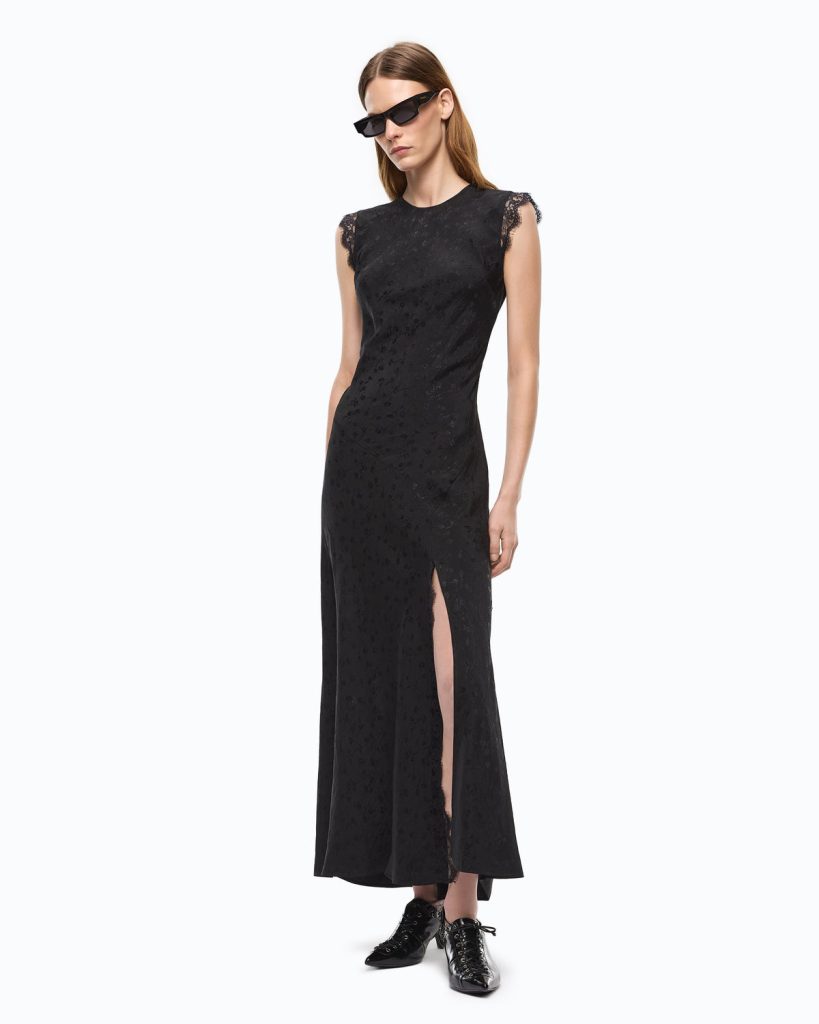
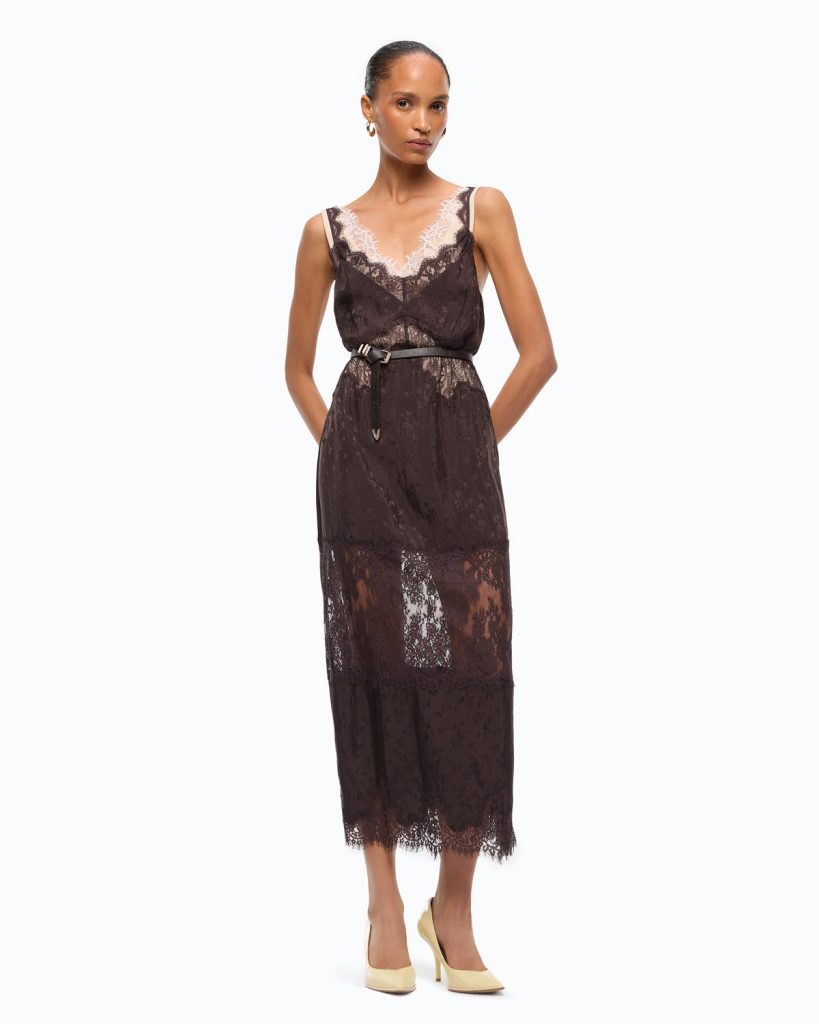
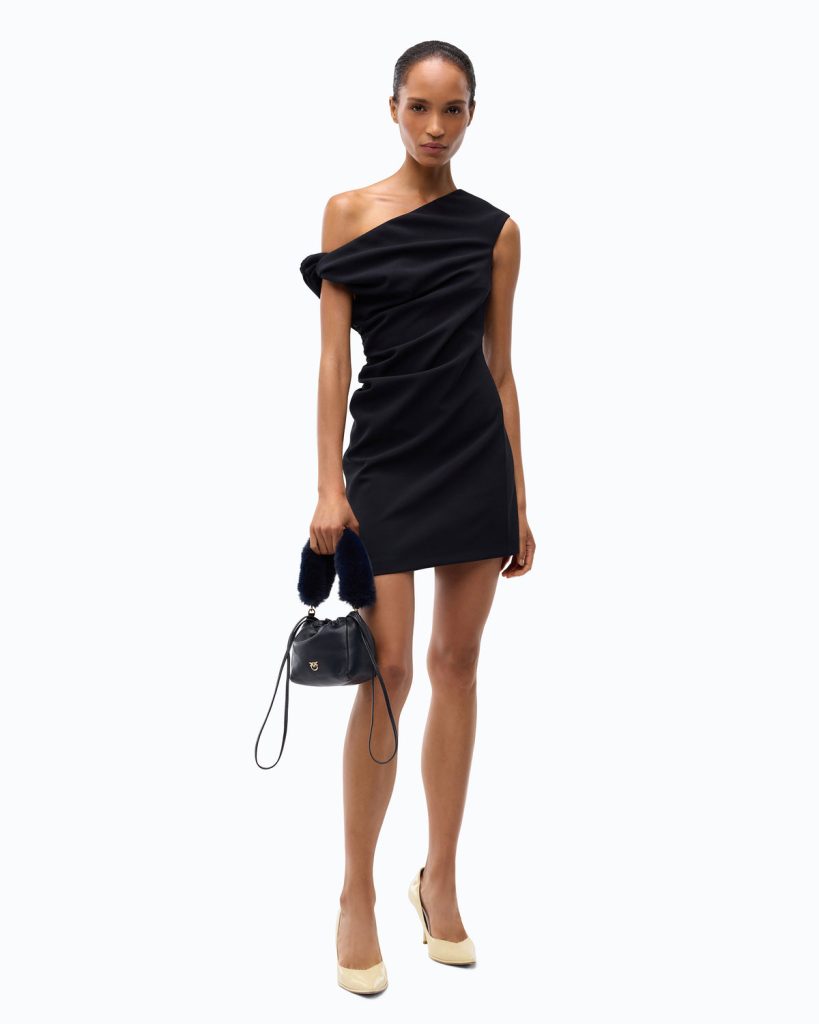
The quickest way to use a women’s clothing size chart is to compare your current body measurements with the exact chart for that garment, then check whether the numbers describe the body or the finished garment. Size labels such as S, M, 10 or 40 are only starting points. Intended silhouette, fabric stretch and personal comfort determine whether the same measurements will produce a close, regular or relaxed fit.
This guide explains the process step by step. It is designed for online shopping, where a useful decision depends on more than choosing the size you usually wear. For a broader framework covering fabric, construction and value, begin with our women’s clothing buying guide.
Start with four current body measurements
Use a flexible measuring tape over lightweight clothing or underwear. Keep the tape level and comfortably close to the body without pulling it tight. Stand naturally and measure twice. If the two results differ, repeat the measurement before using a chart.
Bust
Measure around the fullest part of the bust, keeping the tape level across the back. This measurement is especially important for fitted dresses, button-front shirts, structured jackets and garments without much stretch.
Natural waist
Measure around the narrowest part of the torso, usually above the navel and below the rib cage. Do not assume that the waistband of your trousers sits at the natural waist. Low-, mid- and high-rise garments are designed to sit at different points.
Full hip
Measure around the fullest part of the hips and seat while standing with your feet together. Check the mirror to confirm that the tape is horizontal. Hip measurement often determines the starting size for fitted skirts, trousers and non-stretch dresses.
Inseam
Measure from the top of the inner leg to the desired hem point. A well-fitting pair of similar trousers can also provide a useful garment inseam measurement. Remember that inseam alone does not explain the full trouser length: rise and intended position on the waist also matter.
Identify what the size chart is measuring
A size chart may show body measurements or finished garment measurements. These numbers are not interchangeable.
| Chart type | What the number describes | How to use it |
|---|---|---|
| Body measurement chart | The wearer’s bust, waist, hip or other body measurement | Choose the size range containing your current body measurement, then check the garment’s fit description. |
| Finished garment chart | The actual dimensions of the item when laid flat or measured around | Compare it with a similar garment you own and account for the intended ease and fabric stretch. |
If a chart does not say which type it uses, look for labels such as “body measurements,” “garment measurements,” “laid flat” or “product dimensions.” A product-specific chart is generally more useful than a single generic brand chart because cuts and fabrics can vary within one label.
Understand ease before choosing a size
Ease is the difference between body measurements and finished garment measurements. Positive ease means the garment is larger than the body. Negative ease means it is smaller and relies on stretch to fit. The correct amount depends on the intended silhouette.
- Close fit: follows the body and may use little positive ease or controlled negative ease in stretch fabrics.
- Regular fit: includes enough room for normal movement without looking deliberately oversized.
- Relaxed or oversized fit: includes more room by design; sizing down may change the shoulders, armholes and intended proportions.
Do not automatically size up whenever a body measurement is near the top of a range. First decide which area must fit most precisely and whether the garment is intended to skim, stretch or hang away from the body.
For more examples of how silhouette changes the decision, continue through the fit and sizing guide hub.
Use fabric information to interpret the numbers
Two garments with identical measurements can feel different because fabric construction affects stretch, recovery, drape and thickness. Fibre content is useful, but it is not the whole answer.
A woven fabric usually stretches less than a knit unless elastane or a mechanical stretch construction is present. A rib knit may expand substantially but still feel close to the body. Heavy denim can soften with wear, while lightweight stretch denim may feel comfortable immediately but recover differently after repeated use.
Check four details together:
- Whether the fabric is woven or knitted.
- The stated fibre composition, including any elastane or spandex.
- The fit description and product photographs.
- Care instructions that could affect shrinkage, shape or texture.
Our materials and care guides explain how these clues affect practical wear and maintenance.
Choose the size by the garment’s critical measurement
The most important measurement changes with the product. Start with the area that is hardest to alter or most important to the intended fit.
Dresses
For a fitted woven dress, bust and hip may both be critical. If the garment has a defined waist but a fuller skirt, bust or waist may be the better starting point. Shoulder position, torso length, lining and closure placement can also affect comfort. Browse our dress reviews and fit guides for garment-specific checks.
Jeans and trousers
Waist, hip, rise and inseam should be considered together. A waistband measurement cannot explain where it will sit without the rise. Stretch percentage and fabric recovery matter because a pair that closes easily may still loosen during wear. Our women’s jeans research keeps these measurements separate.
Activewear
Negative ease is common in stretch activewear, but smaller is not automatically more supportive. Check whether the fabric becomes sheer when stretched, whether seams restrict movement and whether the waistband stays in place without excessive pressure. See the activewear review hub for performance-focused criteria.
Do not convert international sizes by label alone
US, UK and EU labels may look convertible, but a conversion table cannot guarantee equivalent garment dimensions. Brand grading, fit model, target customer and product cut can all change the result. Treat an international conversion as a navigation aid, then return to the measurements for the exact product.
The same principle applies to letter sizes. A medium in one chart may cover a different measurement range from a medium elsewhere. Record the measurements that worked rather than relying only on the label in your wardrobe.
When two products use different measurement systems, our clothing comparisons return both options to fit, fabric and use-case evidence instead of treating the labels as equivalent.
Compare the chart with a garment you already own
Finished garment measurements become easier to interpret when compared with a similar item that fits the way you want. Lay the reference garment flat without stretching it and record the same points used by the retailer.
- Measure pit to pit for a flat chest width, then double it only when the chart uses circumference.
- Measure the waistband at the position where the garment naturally sits.
- Measure front rise, back rise and inseam on trousers when those dimensions are provided.
- Compare shoulder width and sleeve length for structured tops and jackets.
- Use a similar fabric and silhouette; a stretchy knit is not a reliable reference for a lined woven garment.
Use a repeatable pre-purchase checklist
Before ordering, confirm the following:
- The chart belongs to the exact product, not only the brand.
- You know whether it shows body or finished garment measurements.
- Your measurements are current and were taken without pulling the tape tight.
- You have identified the intended silhouette and critical fit area.
- You have checked fabric stretch, lining, closures and care requirements.
- You have reviewed the retailer’s current returns and exchange conditions before purchasing.
Keep a short record of the product, size, key measurements and outcome. Over time, this creates a more useful personal fit reference than a collection of size labels.
Common size-chart mistakes
- Using old measurements: body measurements can change even when a familiar size still appears wearable.
- Pulling the tape tight: this reduces the number without representing comfortable garment fit.
- Ignoring the larger measurement: fitted garments may need to accommodate more than one critical area.
- Assuming stretch solves every issue: stretch does not correct shoulder position, rise, torso length or poor seam placement.
- Reading reviews without context: “runs small” is less useful when the review does not include measurements, chosen size or fit preference.
Frequently asked questions
Should I size up when I am between sizes?
Not automatically. Consider the critical measurement, intended silhouette, fabric stretch and whether the product includes finished garment measurements. Sizing up is more likely to help a fitted non-stretch garment, but it can distort shoulders or proportions in other designs.
Are brand size charts accurate for every product?
A brand chart is a useful starting point, but product-specific measurements are better when available. Different cuts, factories, fabrics and garment categories can create variation within the same brand.
What if my bust, waist and hip fall into different sizes?
Choose according to the garment’s most important and least adjustable area, then evaluate whether tailoring is realistic. For a fitted dress, both bust and hip may matter. For a full-skirt dress, bust or waist may carry more weight.
Is a flat measurement the same as circumference?
No. A flat width is measured across one side of a laid-flat garment. Circumference measures all the way around. Double a flat width only when the garment is symmetrical and the retailer’s method supports that comparison.
How often should I remeasure?
Remeasure when fit has changed, before an important purchase or whenever you are uncertain. Using current measurements is more reliable than relying on the size you bought previously.
The practical conclusion
A useful size decision combines current body measurements, the correct product chart, intended ease and fabric behaviour. Start with the garment’s critical measurement, compare a similar item when possible and treat international or letter-size conversions as rough guides rather than guarantees.
Womenswear Reviews applies this same fit-first method across product reviews, comparisons and buying guides. Read how we review clothing to see how sizing evidence is separated from fabric, care and value.